
Fear and Greed: Markets Hit New Highs Amidst Tariff Turmoil and Mega-Cap Cash Flow Shifts
Found this article helpful?
Share it with your network and spread the knowledge!
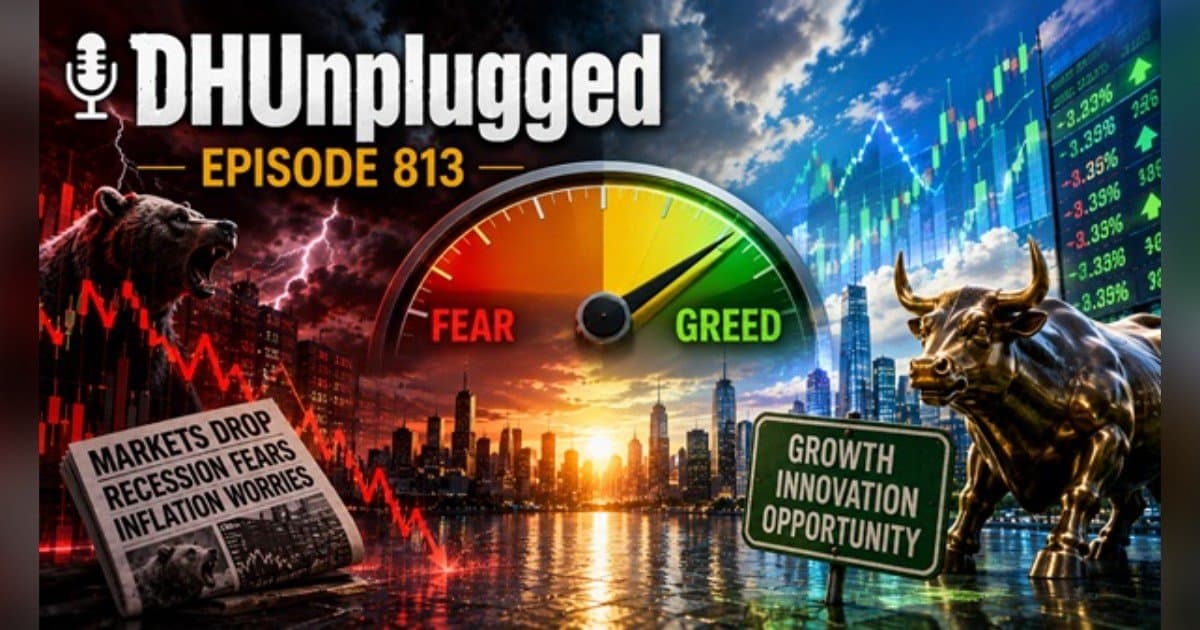
In the latest episode of DHUnplugged, hosts Andrew Horowitz and JC Dvorak tackle a market that has shrugged off war, inflation, softening GDP, and tariff reversals to print new all-time highs. With about 80% of the S&P 500 having reported earnings and nearly 90% beating estimates, investors are pricing in optimism ahead of Wednesday's CPI and Thursday's PPI releases. The CNN Fear and Greed Index sits near 61, prompting the hosts to question whether this signals froth or a contrarian opportunity.
The episode navigates several fast-moving threads shaping the tape: the components of the Fear and Greed Index, including Tom McClellan's Volume Summation Index and Horowitz's proprietary KRI (Key Reversal Indicator); Friday's jobs report showing 4.1% unemployment and only 20,000 payrolls added with a shrinking labor participation rate; oil's rebound after Scott Bessent's failed deal timeline, plus a profitable client trade Horowitz doubled up on; new 10-12% tariffs on 60 trading partners, 25-state lawsuits, and Nike's reported tariff refund; and mega-cap free cash flow swings, including Nvidia's $500 billion financing backstop.
The conversation turns candid on behavioral finance, with Horowitz citing Daniel Crosby's work on loss aversion. "When people are freaking out, it's usually the time to get in. When people are like, oh my God, it's never gonna get worse, the market rally is gonna continue forever, it's like time to get out," Horowitz tells listeners. Dvorak pushes back, asking why proprietary signals used by firms like Jane Street stay private while retail-facing indicators become content. Horowitz's response: "It's content. That's what it seems like to me at least."
Deep dive: the mega-cap free cash flow picture that worried Horowitz heading into the quarter. Apple's free cash flow rose roughly $7.5 billion (31%), while Microsoft fell about $6 billion, Meta collapsed 91% on Mark Zuckerberg's renewed AI spending, Amazon swung $25 billion from positive $18 billion to negative $7.6 billion, Alphabet flipped negative, Tesla turned to a $1.09 billion outflow, and Intel worsened by $7.37 billion after a $20 billion secondary. Nvidia bucked the trend, adding $22.5 billion. The hosts also cover SoftBank's $2.2 billion quarterly profit driven by Masayoshi Son's Intel stake, ByteDance's OpenAI funding, and a heartfelt recap of the Fort Lauderdale meetup honoring the late John C. Dvorak, attended by roughly 35 listeners from across Florida.